
You might be surprised to learn that cricket, a sport enjoyed by millions worldwide, has a rich and fascinating history. Originating in England, the game has undergone significant transformations over the centuries, evolving into the global phenomenon we know today. As you explore the history of cricket, you’ll discover how it has been shaped by various factors, including technological innovations and changes in formats. The sport has captivated billions of fans across the globe, becoming an integral part of the sporting culture in many countries, particularly in India.
The transformation of cricket from a simple game played on village greens to a professional sport with international competitions is a story worth telling. You’ll be taken on a journey through the key milestones in cricket’s development, highlighting its growth into the beloved sport it is today.
The Origins of Cricket: From Village Greens to Global Phenomenon
The history of cricket is a fascinating story that spans centuries, beginning in the village greens of medieval England. As you delve into the game’s early days, you’ll uncover a rich tapestry of history that has evolved. Cricket is believed to have originated in the southeastern counties of England in the 16th century. The earliest known reference to cricket dates back to 1598, when a court case in Guildford mentioned a game called “creckett” being played on a local common.
First Documented Matches and Initial Rules
The first documented matches were played on village greens, with the game gaining popularity among the English gentry. Initial rules were informal, but as the game spread, standardized rules began to emerge.
- The establishment of the first cricket clubs in the 17th century
- The introduction of basic rules, such as the size of the playing field and the equipment used
- The growth of competitive cricket, with matches between local teams
As cricket continued to evolve, it spread beyond England’s borders, eventually becoming a global phenomenon. Understanding the game’s origins provides a deeper appreciation for its development into the sport we know today.
The Evolution of Cricket Equipment Through the Ages
The evolution of cricket equipment is a fascinating story of innovation and adaptation. As you explore the history of cricket gear, you’ll discover how changes in equipment have significantly impacted the game. Cricket bats have transformed from curved, heavy clubs to flat-faced, lightweight willow bats. This change has improved batting techniques and overall performance. Modern bats are designed for power and precision, allowing you to hit shots with greater accuracy.
Top Cricket Team Name Ideas for You
Ball Development: From Stones to Cork and Leather
The cricket ball has undergone a remarkable transformation, from stones and wooden balls to the cork and leather balls used today. This evolution has enhanced the durability and performance of the ball, making the game more enjoyable for you.
Protective Gear: The Safety Revolution
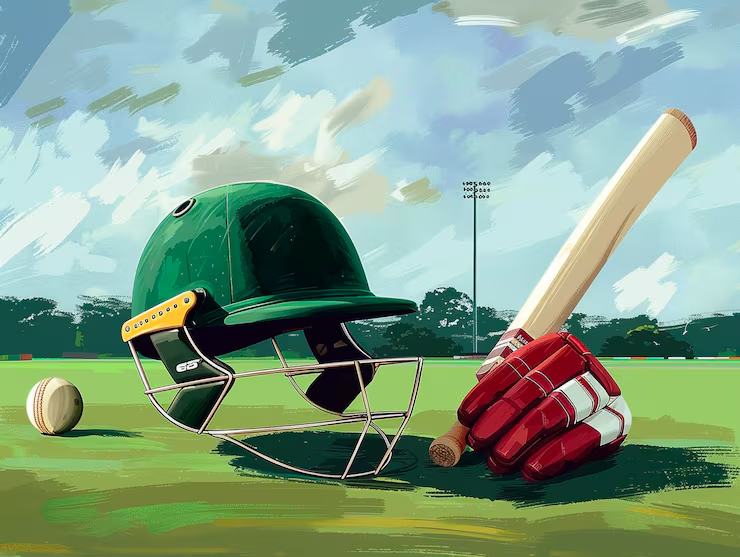
Protective gear in cricket has seen significant advancements, with the introduction of helmets, pads, and gloves. These innovations have greatly improved player safety, allowing you to play the game with more confidence and less risk of injury.
How Cricket Spread Across the British Empire
You might be surprised to learn how cricket, once a village green game in England, became a beloved sport across the British Empire. The spread of cricket was largely facilitated by British colonizers, who introduced the game to various regions as they expanded their empire.
Cricket’s Journey to the Indian Subcontinent
Cricket was introduced to the Indian subcontinent in the 18th century by British sailors and traders. The game gained popularity in the 19th century, especially among the Indian elite who were educated in British schools. The first official cricket match in India was played in 1721, marking the beginning of a cricketing culture that would eventually make India a cricketing powerhouse.
The Sport’s Growth in Australia, West Indies, and Beyond
As the British Empire expanded, cricket spread to other regions, including Australia and the West Indies. In Australia, the game became popular in the early 19th century, and the country played its first Test match against England in 1877. The West Indies, comprising various Caribbean islands, also adopted cricket enthusiastically, producing some of the game’s most legendary players. The globalization of cricket was thus a direct result of the British Empire’s expansion, leaving a lasting legacy in the sporting cultures of these regions.
The Evolution of Cricket Formats and Rules
As you explore the world of cricket, you’ll notice the diverse formats and rules that have developed over time, enhancing the game’s excitement and complexity. The evolution of cricket formats has been driven by the need to cater to different audiences and adapt to changing player and spectator needs.
Explore the Exciting World of Tamil Cricket Team Names
Test Cricket: The Traditional Form
Test cricket is the oldest and most traditional format, characterized by its five-day duration and emphasis on endurance and strategy. It remains a revered format, testing the skills and mental toughness of players.
One-Day Internationals: Revolution in the 1970s
The introduction of One-Day Internationals (ODIs) in the 1970s revolutionized cricket, offering a limited-overs format that emphasized quick scoring and aggressive play. ODIs have become a staple of international cricket, with teams competing in high-intensity matches.
Rule Changes That Transformed the Game
Several rule changes have significantly impacted cricket, including the introduction of the Decision Review System (DRS) and the use of technology for run-out and stumping decisions. These innovations have enhanced the accuracy and fairness of the game.
Technological Innovations That Changed Cricket Forever
Technological innovations have profoundly impacted cricket, introducing new tools and systems that have improved the game’s accuracy and excitement. You can see the difference in various aspects of the game, from umpiring decisions to player performance analysis.
Decision Review System (DRS) and Hawk-Eye
The Decision Review System (DRS) and Hawk-Eye technology have been instrumental in enhancing the accuracy of umpiring decisions. DRS allows teams to review certain decisions, while Hawk-Eye provides a detailed analysis of the ball’s trajectory.
Broadcasting Evolution: From Radio to Ultra HD
Cricket broadcasting has evolved significantly, from radio commentary to Ultra HD television broadcasts. This evolution has enhanced the viewing experience, allowing fans to enjoy the game in high definition.
The Most Popular Cricket Team in the World
Data Analytics and Performance Tracking
Data analytics has become a crucial aspect of cricket, providing teams with valuable insights into player performance. Advanced statistics and video analysis help players improve their skills and develop effective strategies.
Smart Equipment and Training Technologies
The use of smart equipment and training technologies has also become more prevalent in cricket. These innovations enable players to track their performance, identify areas for improvement, and optimize their training regimens.
India’s Role in the Evolution of Cricket
As you explore the history of cricket, you’ll discover India’s pivotal role in shaping the sport into what it is today. India’s influence on cricket has been multifaceted, ranging from its rise as a cricketing powerhouse to its significant contributions to the commercialization of the game. India’s cricketing journey has been marked by remarkable milestones. The country’s passion for cricket has driven its growth, both in terms of participation and viewership.
From Underdogs to Cricketing Powerhouse
India’s transformation from an underdog to a cricketing powerhouse is a testament to the country’s dedication to the sport. With a series of outstanding performances, the Indian cricket teams have consistently demonstrated their prowess on the international stage.
The IPL Revolution and Its Global Impact
The Indian Premier League (IPL) has revolutionized cricket, introducing a fast-paced and highly competitive format that has captivated audiences worldwide. The IPL’s success has not only elevated Indian cricket but has also had a profound impact on the global game.
India’s Contribution to Cricket’s Commercial Growth
India has played a crucial role in the commercialization of cricket, with the Board of Control for Cricket in India (BCCI) driving significant revenue growth through sponsorships and broadcasting rights. The country’s massive cricket market has attracted numerous brands, further fueling the sport’s commercial success.
Indian Cricket Icons Who Changed the Game
Indian cricket has been blessed with numerous icons who have left an indelible mark on the game. Players like Sachin Tendulkar, Kapil Dev, and MS Dhoni have inspired generations of cricketers and fans alike, contributing to the sport’s popularity and growth.
Who Are All Made Fastest Fifty in Test Cricket Matches!
Conclusion
Cricket’s journey from village greens to a global phenomenon has been fascinating. As you look to the future, it’s clear that cricket evolution will continue, driven by new formats, technologies, and innovations. The introduction of new formats like T20 has already changed the game, and cricket innovations will likely continue to shape its future. The use of technology, such as the Decision Review System (DRS) and Hawk-Eye, has improved the game’s accuracy and viewer experience.
As cricket prospects continue to grow, the sport is expected to attract new fans and players worldwide. India’s role in cricket’s evolution has been significant, and the country’s continued involvement will be crucial in shaping the game’s future. The future of cricket is bright, with new challenges and opportunities on the horizon. As the game continues to evolve, it will remain a beloved sport, captivating new generations of fans and players alike. You can expect cricket to continue growing, with cricket futureof cricket looking promising.

I’m a cricket analyst and passionate storyteller, decoding the game beyond the scoreboard. With sharp insights, match breakdowns, and a deep love for the sport, he delivers crisp, factual, and fan-first content trusted by cricket readers worldwide.